Ah, the XRP Ledger, that labyrinthine contraption of code and ambition, has stumbled upon a misstep so absurd, so delightfully Gogol-esque, that one cannot help but chuckle amidst the chaos. Ripple, ever the intrepid navigator of this digital quagmire, declares with a flourish that it shall tighten the screws-or rather, the amendment process-after a critical flaw was unearthed in the proposed Batch amendment (XLS-56). A bug, you say? Nay, a specter that exposed the cracks in their review process, though the network’s last-resort safeguards, like a loyal yet exasperated servant, prevented any mainnet calamity.
In a missive on the modern town square known as X, RippleX Head of Engineering J. Ayo Akinyele-a name that rolls off the tongue like a carriage wheel on cobblestones-proclaimed that the bug was spotted last week by Cantina AI. Reported with the solemnity of a village elder, it was swiftly validated as critical. Yet, like a farce in a Gogol novella, the issue never blossomed into exploitability on mainnet, for the amendment had not yet awakened from its slumber. A hotfix was dispatched posthaste, disabling both Batch and its related fix, while a broader remediation is pondered with furrowed brows.
Ripple’s Dance with the Digital Absurd
Akinyele, with the candor of a man who has seen too many bureaucratic follies, admitted, “The Batch amendment progressed further than it should have.” Ah, the folly of progress! “As active participants in the amendment lifecycle,” he continued, “we share responsibility for ensuring that review, signaling, and activation safeguards meet the highest standard. In this case, we must do better.” One can almost hear the sigh of a long-suffering bureaucrat, quill in hand, bemoaning the state of affairs.
Yet, Ripple, ever the optimist in a world of chaos, frames this episode as a failure of early-stage review rather than of the XRPL governance model itself. “The amendment process functioned as designed,” Akinyele noted, with the air of a man defending a beloved yet flawed relative. Activation gating, he assured, prevented harm to mainnet, and the bug bounty disclosure route worked as intended. But he added, with a wink and a nod, “Those safeguards matter, but they should serve as a final line of defense, not the primary one.” A lesson, perhaps, for those who build castles on sand.
This distinction weaves through Ripple’s response like a thread in a tapestry of absurdity. Rather than advocating for tighter centralized control-a notion as appealing as a tax audit-Akinyele argued that amendment security on XRPL must remain distributed across core contributors, validators, the XRPL Foundation, and outside researchers. “No single entity controls activation. No single entity owns risk in isolation,” he wrote, painting a picture of decentralization as both a curse and a blessing, provided it is matched by layered defenses and better coordination. A delicate balance, indeed, like walking a tightrope while juggling flaming torches.
Ripple’s proposed fixes are as broad as they are ambitious. Akinyele declared that future releases introducing features with “theoretical risk of disruption” will undergo multiple independent audits with reputable security firms, in coordination with the XRPL Foundation. The logic is simple: different teams catch different classes of issues, and redundancy reduces blind spots when code touches consensus-critical behavior. A wise move, akin to hiring multiple cooks to ensure the soup is not spoiled.
The company also plans to expand the bug bounty program and formalize adversarial testing campaigns before activation. Akinyele pointed to initiatives such as the Lending attackathon and a UBRI-sponsored hackathon as models for this approach, arguing that incentivizing white-hat attackers before launch is far cheaper than reacting after the fact. A lesson learned from the Batch incident, he added, has already affected other roadmap items, saying Ripple “deliberately held lending back” to allow for more review, testing, and scrutiny before moving toward activation. Prudence, it seems, has found a place in their lexicon.
Part of this next phase will rely more heavily on AI, that modern-day oracle of code. Akinyele revealed that Ripple is incorporating AI-assisted code review, automated invariant discovery, agentic fuzzing, and simulated attack scenarios into its software development lifecycle. “AI does not replace expert C++ engineers,” he wrote, “but rather augments them,” especially when “subtle logic interactions at critical points can create outsized risk.” A marriage of man and machine, if ever there was one.
Longer term, Ripple aspires to make formal verification the standard for high-risk ledger components. This includes modeling amendment behavior before activation, proving safety properties for critical components, and integrating formal methods from XLS specification through implementation and testing. The broader aim, Akinyele said, is end-to-end assurance that amendment code is not only functionally correct but aligned with defined security and safety properties. A lofty goal, akin to seeking perfection in a world of imperfection.
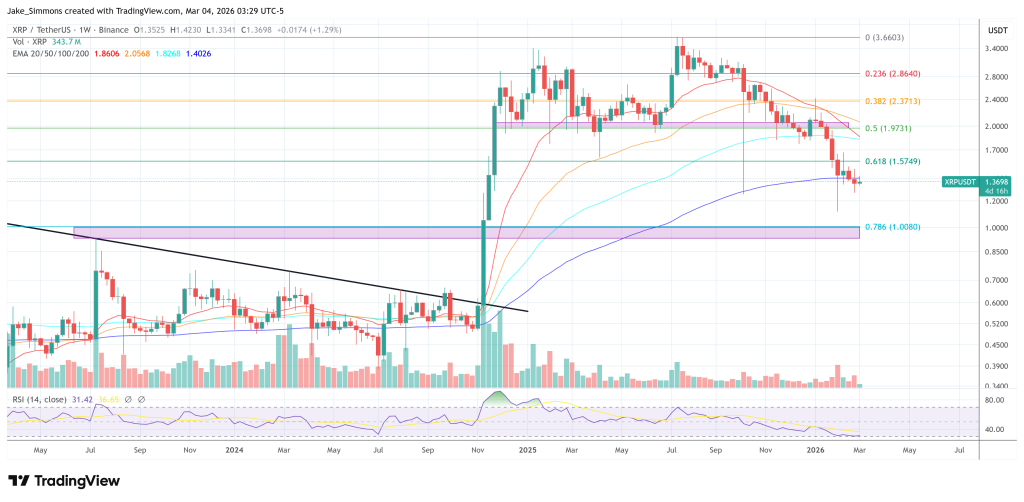
At press time, XRP traded at $1.3698, a number as arbitrary as the whims of fate.
Read More
- USD HUF PREDICTION
- Gold Rate Forecast
- ETH PREDICTION. ETH cryptocurrency
- Brent Oil Forecast
- One Weird Trick: Billionaires Flock to Crypto-Ready Trump Tower in Dubai! 🏦🏙️
- Crypto Boom: Figure and Friends Leap into the Market-Is it Genius or Madness? 🤔💸
- Silver Rate Forecast
- Bitcoin Beats Amazon! 🍕 The Day Crypto Took Over the World
- USD GEL PREDICTION
- How Ethereum Became the Unexpected Hero of AI Finance 🚀💰
2026-03-04 16:11