In the cold corridors of Seoul’s financial bureaucracy, the Financial Services Commission (FSC) issued a decree so stern it might have made even the most impassive bureaucrat wince: all domestic crypto exchanges must adopt near real‑time asset‑matching systems. The innocent and the ambitious alike could scarcely imagine such meticulous scrutiny.
A Relentless March of Time for Crypto Exchanges
By the end of May, if exchanges do not wish to be trampled by the heavy boot of compliance, they must abandon their leisurely 24‑hour reconciliation cycles and embrace a 5‑minute regime. One can almost hear the ticking of the clock echoing like the judgmental whispers of fate.
These new systems, which compare in perpetuity the claimed riches of customers with the cold, indifferent reality of wallets and bank accounts, are the mechanized conscience of the modern exchange. Every few minutes, they reconcile balances, order‑books, and margins, triggering alerts or even a kill‑switch if the fragile illusion of solvency falters.
It seems that even the mighty exchanges, with their vaunted kill-switches, are not immune to folly; regulators discovered them woefully unreliable in times of chaos. Hence, daily reports and monthly independent audits became a necessary pilgrimage for these institutions.
Another Step in the Endless March of Legislation
This tightening of rules is perhaps the most vigorous since Korea first flirted with virtual-asset laws. The new provisions are destined to find their place within the Digital Asset Basic Act, still being shaped by government and party alike, like a sculptor struggling with the stubborn marble of legislative reality.
Originally scheduled for March 31 on the National Policy Committee’s agenda, the debate on the second phase of crypto law was deferred until after the local elections of June 3-a delay that seemed to suggest even lawmakers are wary of confronting the mercurial nature of virtual wealth.
Bithumb’s Ghostly Bitcoin Fiasco
Not long ago, Bithumb provided a cautionary tale so absurd it could have been written by a satirical novelist: an employee, in a moment of careless folly, credited 620,000 BTC to 249 users instead of the local currency. The resulting crash in BTC price and the ensuing chaos revealed that the internal ledger was as tenuous as a paper bridge over a stormy river.
The aftermath was predictably severe: a six-month partial suspension and a fine of 36.8 billion won. The moral seems clear-recklessness in crypto, no matter how comic in its inception, is met with the cold hand of reality.
Now, Korea pursues a vision where exchanges operate with the solemnity of banks, with real-time verification and rigorous accountability. Traders may find their short-term liquidity thinner, but at least the specter of ghost assets will haunt them no longer.
Should this 5-minute reconciliation and kill-switch ritual succeed, the world may soon follow, and the Bithumb episode could become the archetype of centralized-exchange prudence.
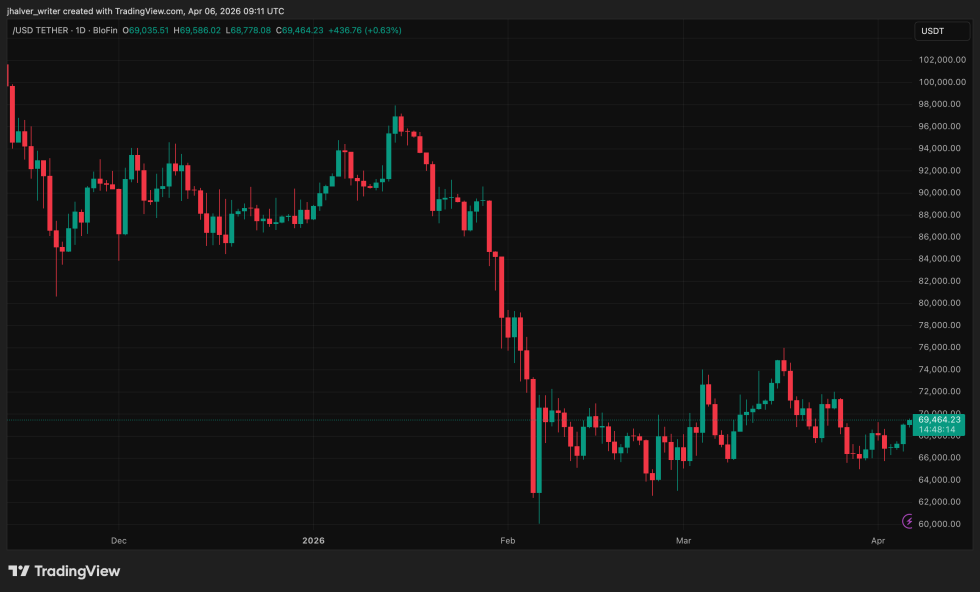
Cover image from Perplexity. BTCUSDT chart from Tradingview.
Read More
- Gold Rate Forecast
- Brent Oil Forecast
- USD ZAR PREDICTION
- Silver Rate Forecast
- US DOJ Shuts Down Crypto Unit: Who Let the Banter Out? 😎
- You’ll Never Guess What This Crypto ETF Claims To Do For Your Portfolio! 🤑
- EUR TRY PREDICTION
- Bitcoin Whale Selling Pressure Eases as Binance Inflows Drop and ETF Demand Weakens
- Can ENA Hit $1 Without Whale Backup? 🐋💸
- Kadena’s Swan Song: Blockchain Lives, KDA Weeps 😢💔
2026-04-06 14:42