Stabble, a decentralized exchange built on Solana, advised all users who provide funds to the platform to withdraw them right away. This came after a researcher named ZachXBT revealed evidence suggesting a former Stabble employee may be involved with IT operations linked to North Korea.
Key Takeaways:
- Stabble urged all liquidity providers to withdraw funds on April 7, 2026, after ZachXBT flagged a suspected former employee as a suspected DPRK operative.
- No exploit or breach occurred at Stabble, and the protocol’s TVL stood at approximately $1.75M at the time of the alert.
- Stabble’s new team plans fresh audits before resuming normal operations, following a takeover roughly four weeks prior.
Solana DEX Stabble Issues Emergency LP Withdrawal
The former employee was identified as Keisuke Watanabe, operating under aliases including kasky53, keisukew53, kdevdivvy, and 0xWoo across GitHub and social platforms. ZachXBT disclosed Watanabe’s full name, associated wallet addresses on Solana and Ethereum, email, and supporting OSINT documentation during a public post on X directed at Elemental, a Solana DeFi infrastructure project where Watanabe had also worked.
Stabble’s new management team, which took over the project roughly four weeks before the disclosure, confirmed the former employee had worked at Stabble approximately one year earlier. The team said there was no exploit, no breach, and no known security incident of any kind. The emergency post from the Stabble account on X read:
“EMERGENCY! guys please temporally withdraw your liquidity instantly! Better safe than sorry. The new stabble team.”
In a follow-up statement, the team clarified their position. “We are not PR people, we are quants and early DeFi degens,” they wrote. “Our primary focus is the safety of our LPs. There has been no exploit. We received a message and are acting on it.”
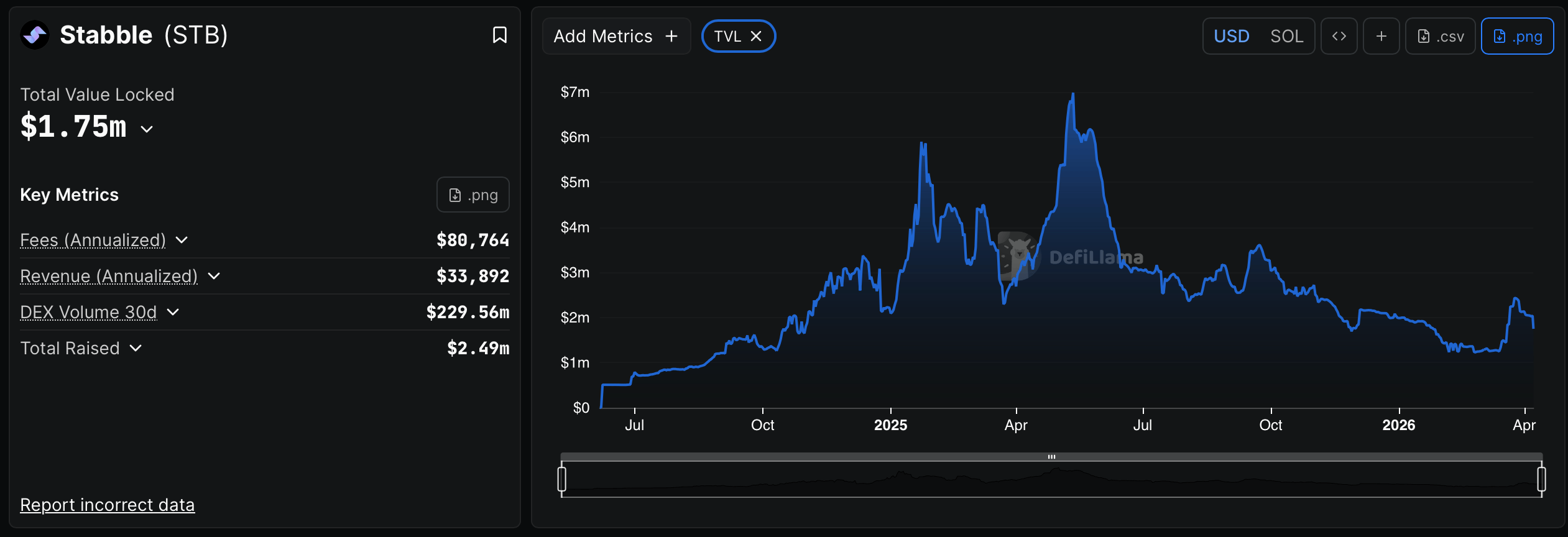
The protocol’s total value locked stood at approximately $1.75 million at the time of the alert, with significant withdrawals already underway and a large portion of funds concentrated in a single wallet. The limited TVL contained the scope of any potential risk. DPRK-linked IT workers infiltrating crypto and DeFi projects is a documented pattern spanning at least seven years.
These operatives frequently pose as Japanese or other foreign developers to gain insider access. U.S. authorities and independent researchers have flagged suspected North Korean workers inside more than 40 DeFi platforms.
The recent Drift Protocol exploit on Solana, estimated at approximately $280 million and attributed to suspected North Korean actors, involved months of social engineering rather than a smart contract vulnerability.
Stabble faces common challenges for projects taken over by new teams. The current management didn’t have a complete understanding of the existing code or who contributed to it. Their choice to temporarily halt work and get thorough reviews from external experts suggests they’re prioritizing careful evaluation over simply appearing to be active.
Leading up to the recent issue, the team had seen strong growth, with the total value locked (TVL) doubling, revenue increasing by three to four times, and the price rising by 100%. Thankfully, those gains haven’t been erased – no funds were lost, and users can still withdraw their money as usual.
ZachXBT‘s disclosure connected Watanabe to Elemental founder “Moo” during commentary on the Drift hack, with Stabble caught in the broader call-out through its prior association with the same individual. The cross-project exposure highlights how one confirmed bad actor can ripple across multiple protocols.
ZachXBT criticized the other party, accusing them of hypocrisy and pointing out that they had secretly employed a North Korean IT worker at Elemental for several years.
Moo rejected the accusation of virtue signaling and shifted the focus to accountability. The Elemental founder argued that when major failures occur, the minimum standard is to acknowledge mistakes, communicate transparently, and face users directly.
People had mixed reactions to how Stabble dealt with the situation. While some praised the team for being open and quick to respond, others felt the use of the word “EMERGENCY” was alarmist, especially since there wasn’t any proof of a real threat.
The Stabble team plans to contact major auditing firms before reopening liquidity operations. No timeline has been confirmed. Crypto projects of all sizes continue to face pressure to vet contributors through background checks, code review isolation, and privilege controls. The Stabble incident adds to a growing list of cases where DPRK-linked identity fraud reached projects long after the operative had moved on.
Read More
- Gold Rate Forecast
- Brent Oil Forecast
- Mastercard’s Billion-Dollar Bet: A Fax Machine in a Blockchain World
- USD ZAR PREDICTION
- US DOJ Shuts Down Crypto Unit: Who Let the Banter Out? 😎
- CZ Sounds the Alarm – Binance Scammers Beware!
- Bitcoin Whale Selling Pressure Eases as Binance Inflows Drop and ETF Demand Weakens
- Is Binance Coin About to Break the Internet? 🚀💰
- Unbelievable Growth: LATAM Crypto Exchanges Skyrocket to $27 Billion! 🚀💰
- 😏 Kazakhstan’s BNB Deal: State-Supported but Intriguingly Constrictive!
2026-04-07 23:58