On May 12th, JP Morgan Chase submitted a filing with the Securities and Exchange Commission (SEC) to launch another tokenized money market fund built on Ethereum. This new fund would involve digital tokens representing investments in US Treasury bonds and short-term loans, allowing investors to store them in digital wallets or use them as collateral in online transactions.
Recent data shows the value of real-world assets represented as tokens – tracked by rwa.xyz – has reached around $32 billion. Major companies like BlackRock are also developing similar services for institutions, following the new GENIUS Act.
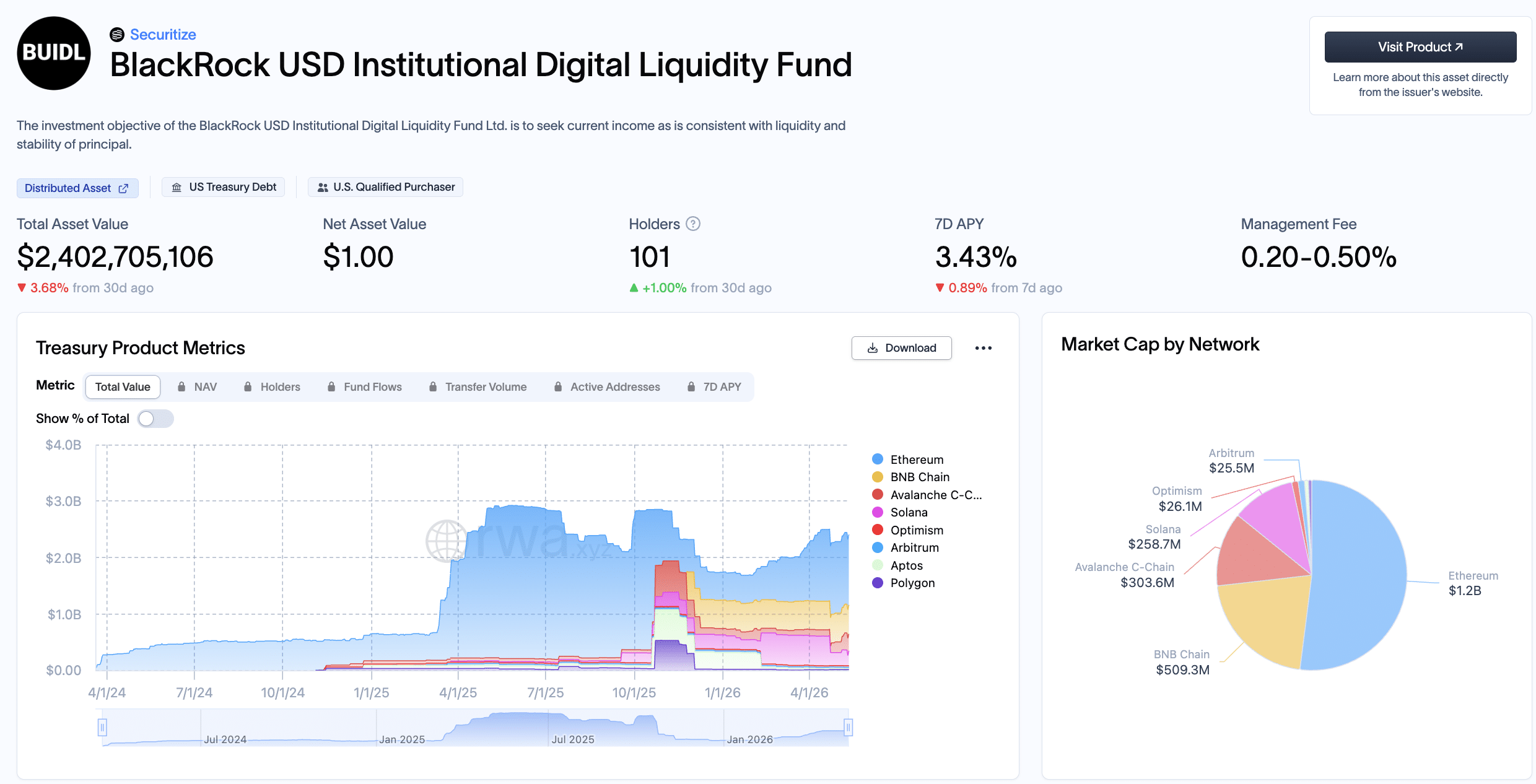
(SOURCE RWA.xyz)
This isn’t just a new product release. It’s JP Morgan demonstrating that their initial testing of tokenizing assets is complete. More importantly, they’re showing they’ll be building the future of digital finance on Ethereum’s public network, rather than a private system of their own.
We suspect the choice of Ethereum mainnet over JP
Morgan built its own Kinexys Digital Assets system for its client products because it understands that large-scale investment doesn’t happen within single, traditional banking systems.
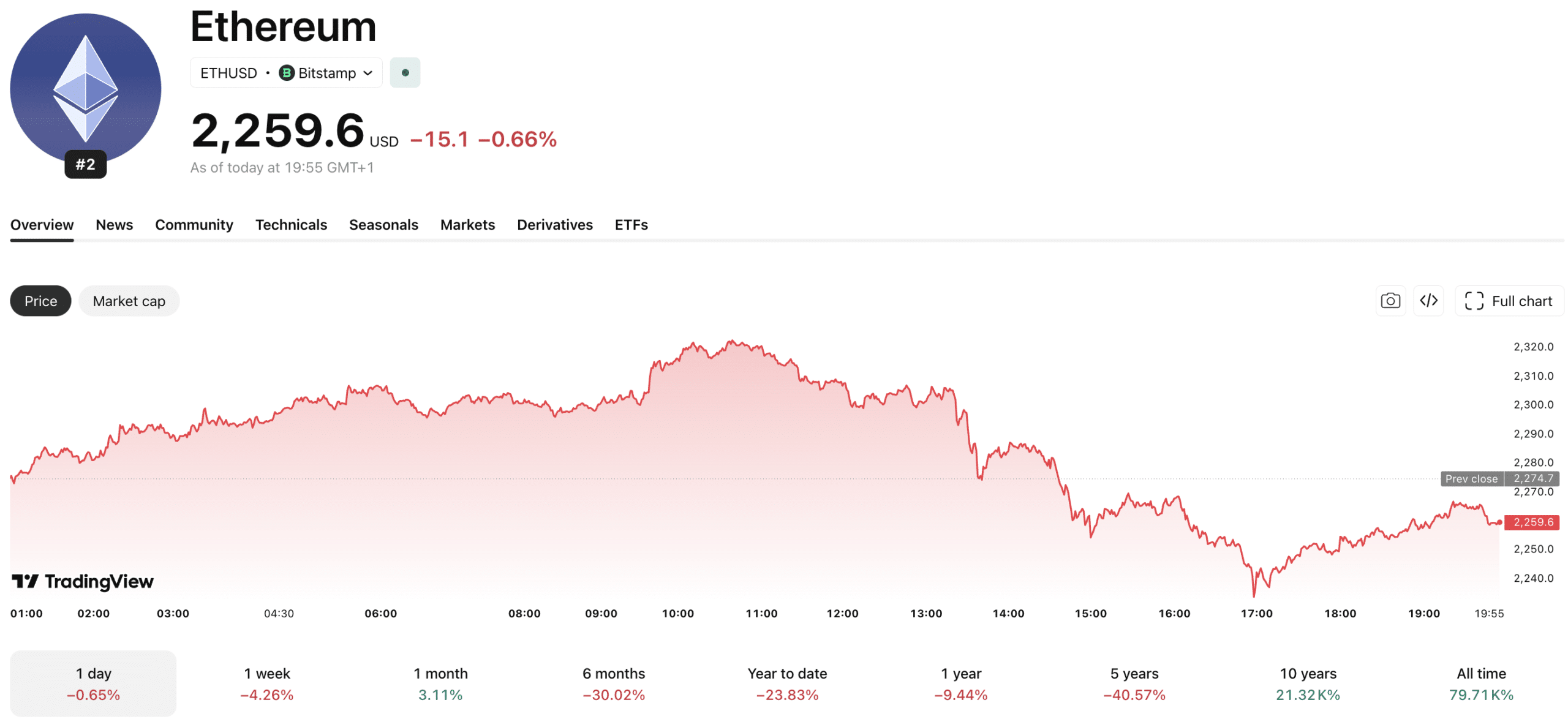
(SOURCE: TradingView)
JP Morgan JLTXX Filing: How the Second Tokenized Treasury Fund Actually Functions
As a researcher, I’ve been studying this new fund, JLTXX, which is being set up under JP Morgan Trust IV as Token Class Shares. It’s scheduled to launch on May 13, 2026, and will primarily invest in very short-term US Treasury securities – those maturing in 93 days or less. To ensure stability and comply with SEC regulations (Rule 2a-7), the fund will hold at least 99.5% of its assets in cash or government-backed investments.
Unlike traditional money market funds that can take a day or two to finalize transactions, this system settles them in just minutes. However, a standard custodian still legally holds the assets. The blockchain record of holdings matches the official records, but in case of a disagreement, the custodian’s records are considered final.
This new fund, JLTXX, is different from the bank’s earlier fund, MONY. While MONY needed a minimum investment of $1 and was aimed at large institutions with at least $25 million in assets, JLTXX is specifically designed to be a reserve asset for companies that issue stablecoins and comply with the rules set by the GENIUS Act.
Permissioned Ethereum addresses help the fund meet regulatory requirements directly within the blockchain, letting it operate publicly while still maintaining necessary access controls for institutional investors. Investors can use both stablecoins and traditional cash to subscribe and redeem shares, giving treasury managers more options if they already use digital assets.
This product utilizes Kinexys Digital Assets, JP Morgan’s blockchain platform. Kinexys has successfully tested tokenized assets on several blockchains, including Solana and Base – and these tests have led to a fully operational product now registered with the SEC and running on Ethereum. JP Morgan has also proven its ability to handle international transactions using tokenized Treasury bills on the XRP Ledger, showcasing its commitment to working across multiple blockchain networks – a strategy confirmed by their recent JLTXX filing.
DISCOVER: Best Meme Coins to Buy in 2026
Institutional Crypto and the RWA Race: What JP Morgan’s Public-Chain Pivot Reveals About Market Structure
JPMORGAN JUST FILED TO PUT U.S. TREASURIES ON ETHEREUM
As a researcher following the development of digital finance, I’ve noted that JPMorgan has submitted plans to launch a new fund called JLTXX. This fund, an OnChain Liquidity-Token Money Market Fund, will operate directly on the Ethereum blockchain, leveraging the $ETH network.
This fund only invests in U.S. Treasury bonds and short-term loans that are completely backed by collateral.
— BSCN (@BSCNews) May 13, 2026
The GENIUS Act, which became law in July 2025, set new rules for stablecoins by preventing issuers from offering interest. This change clarifies that stablecoins are different from accounts that earn interest, and it allows for the creation of tokenized money market funds that follow SEC guidelines. JPMorgan Chase has submitted a second application focusing on services for corporate treasuries and cash management, areas now separate from stablecoin-related activities.
Competition is heating up in the world of tokenized real-world assets (RWAs). BlackRock’s BUIDL fund, launched in March 2024, has quickly grown past $500 million on Ethereum, demonstrating strong demand from institutions. By the first quarter of 2026, these tokenized RWAs are predicted to reach $8.6 billion, with Ethereum dominating the market at around 70% of that value. Franklin Templeton is also growing its presence in this area and is expected to launch more products on Solana, fueling a competitive push for institutional investment totaling $12 billion.
JP Morgan’s Onyx blockchain, which began in 2020 and is expected to process over $1 billion in transactions each day by 2025, offers a reliable foundation for growth in this area. The MONY fund, launched in December 2025 with $100 million, is a test case, and JLTXX is the next product designed to attract the reserve market, offering potential where stablecoins currently fall short.
More and more traditional financial institutions are starting to embrace crypto, as shown by Charles Schwab offering crypto brokerage services. Importantly, JP Morgan recently filed for its second tokenized fund on a public blockchain, which confirms that Ethereum can handle large financial transactions and be used as a core part of their systems.
EXPLORE: Next Crypto to Explode in Q2
Read More
- Gold Rate Forecast
- Brent Oil Forecast
- Silver Rate Forecast
- EUR AUD PREDICTION
- Gold’s Mad Dash to $5,000: Will It Outrun Its Own Shadow?
- DOGE EUR PREDICTION. DOGE cryptocurrency
- PEPE PREDICTION. PEPE cryptocurrency
- EUR CNY PREDICTION
- GBP CAD PREDICTION
- IP/USD
2026-05-14 01:17