Bridge exploits and admin compromises drove most April losses, exposing critical weaknesses in DeFi infrastructure layers.
April 2026, a month so cursed it could’ve been written by a drunk oracle. The crypto world bled $620 million across 20 days, its veins clogged with 12 separate incidents. Hackers, like vultures at a feast, feasted on cross-chain bridges, admin access points, and collateral systems-areas where trust and automation collided in a grotesque waltz of incompetence.
Total damages? A staggering 3.7x the Q1 total. One might call it progress, if “progress” meant watching protocols crumble like poorly baked bread. Infrastructure-level vulnerabilities reigned supreme, not coding errors. After all, what’s a smart contract bug when you can just hijack a domain or exploit a pre-signed transaction from a “Security Council” that clearly forgot what “security” means?
Early Crypto Hack Wave Driven by Social Engineering
DefiLlama reported April’s opening act: Drift Protocol lost $285 million to social engineering. Attackers, posing as a trading firm, spent months schmoozing internal teams until they were granted access. Once inside, they deposited fake collateral and drained vaults faster than a bear market drains hope. North Korean hackers, our favorite digital scribes of a new dark age, were allegedly behind it-because nothing says “geopolitical weight” like stealing from a decentralized ledger.
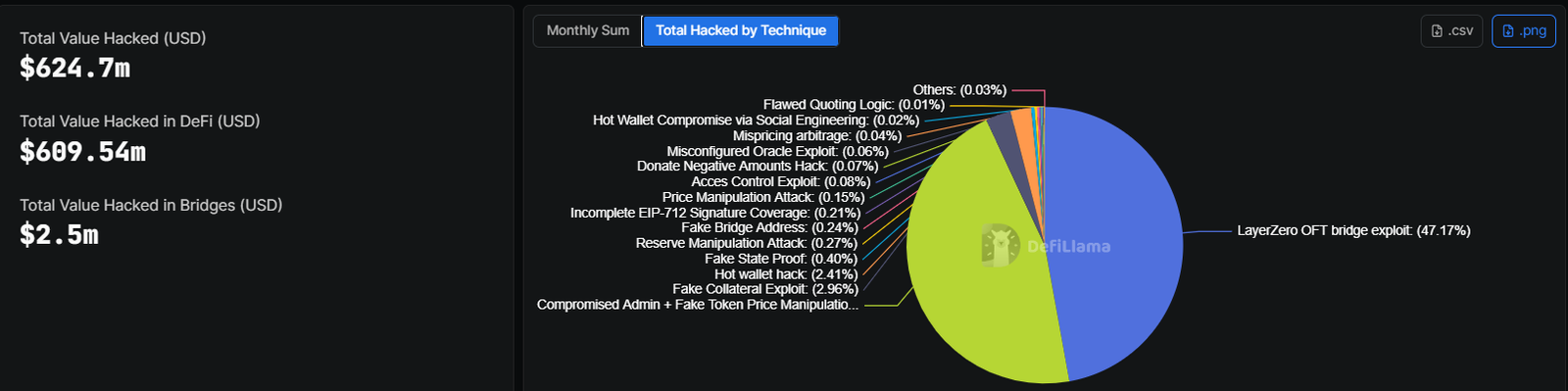
Image Source: DefiLlama
Theft via friendship. Who knew?
Silo Finance and Dango followed, losing $392,000 and $410,000 respectively to oracle misconfigurations and smart contract bugs. Meanwhile, BSC trading pairs were flash-loaned into oblivion, draining $1.67 million. One wonders if the auditors were paid in crypto, or if they simply forgot to audit.
- Social engineering: The art of pretending to be human to steal from humans.
- Oracle misconfigurations: Because pricing errors are just a feature, right?
- Flash loans: Because who wouldn’t want to manipulate reserves in a low-liquidity pool?
- Smart contract bugs: Still a footnote, but hey, at least they’re small!
Aethir, SubQuery, Hyperbridge-all added their tears to the digital well, totaling $2.5 million. And let’s not forget CoW Swap, which lost $1.2 million after attackers hijacked its domain. Frontend systems: still as secure as a Windows 95 computer left in a rainstorm.
Mid-Month Escalation Hits Exchanges and Lending
Mid-April brought coordinated breaches worthy of a Bond villain. Grinex lost $13.74 million, its funds scattered like confetti across wallets. Foreign intelligence actors? Maybe. Or perhaps it was just a particularly bored intern with a phishing kit.
Rhea Lend followed, bleeding $18.4 million. Chainalysis called it a possible exit scam. One imagines the CEO now living in a villa in Nevis, sipping piña coladas while the rest of us clean up the mess.
Then came Kelp DAO, which suffered a $292 million exploit via a LayerZero bridge vulnerability. Attackers drained 116,500 rsETH in one transaction-18% of the supply. Aave, the DeFi titan, now faces $177 million in bad debt. Collateral? More like collateral damage.
Bridges accounted for 47.17% of losses. The rest? A smattering of methods so fragmented, one suspects hackers were just picking at leftovers.
Late-Month Crypto Hack Activity Shows Systemic Weakness
Later incidents proved the crisis wasn’t isolated. Juicebox, Thetanuts, Volo Vault-all lost millions. Attackers, like wolves scenting blood, targeted smaller platforms: Kipseli, Giddy, MONA. Even Purrlend fell victim, losing $1.5 million after a suspicious multisig transaction. Unauthorized bridge access granted, and within hours, the loot was gone.
- Fake collateral: 3% of losses. Because nothing says “trust” like fake assets.
- Fake state proof attacks: Verification systems so robust, they’d be proud.
- Reserve manipulation: Automated market makers, now automated money burners.
- Signature validation gaps: Because who needs authorization when you can just forge it?
Cross-chain bridges remain the sector’s Achilles’ heel. April’s data confirmed what any half-wit could’ve deduced: admin access, bridges, and collateral systems are the holy trinity of disaster. And as attackers refine their methods, one wonders if the crypto world will collapse under its own hubris-or if it’ll just keep hemorrhaging, dollar after blood-soaked dollar.
Read More
- Brent Oil Forecast
- Silver Rate Forecast
- Gold Rate Forecast
- ETH PREDICTION. ETH cryptocurrency
- USD TRY PREDICTION
- USD MXN PREDICTION
- EUR PLN PREDICTION
- DOGE AUD PREDICTION. DOGE cryptocurrency
- EUR INR PREDICTION
- APT’s Price Soars: Is $10 Just a Dream or a Reality? 🤔💰
2026-04-26 20:15