If you ever thought crime stories were a touch too dramatic to be true, you clearly haven’t met the modern world’s answer to a handyman, only instead of hanging shelves, it sells revenge by the coin. The South Korean police have unearthed a criminal ring that peddles vengeance to paying customers, and yes, the payments arrive in cryptocurrency like shy pigeons delivering tiny digital coins to a very dubious nest.
“We will take revenge on your behalf” So Long as You Pay in Crypto
There’s red paint on doors, there’s human waste nudging its way onto stairwells, there are defamatory leaflets fluttering about like oversized confetti, and there’s a Telegram channel whose messages self-destruct as if they were trying to vanish into a cloud of digital mischief. It’s not the opening scene of a Korean action movie; it’s a real-life business model the police are now trying to get a handle on.
South Korean outlets reported on Monday that the Gyeonggi Southern Provincial Police Agency has tied together at least six similar “revenge attacks” across cities like Hwaseong, Uiwang, Gunpo, Pyeongtaek and Paju. They were allegedly commissioned via private Telegram channels and funded with small crypto payments. Seoul itself, the glamorous center of everything, seems oddly untouched so far-perhaps because crime has its own sense of humor and prefers the provinces for its darker punchlines.
Price offers range from around $325 in crypto to blanket a neighborhood with flyers that falsely brand men as child sex offenders or women as prostitutes. For up to roughly $1,300, you can go for more dramatic harassment-like smearing human waste on doors and stairwells, gluing locks, and decorating the streets with aggressive graffiti that might make even a graffiti artist take a long, hard look at a wall and say, “No, not today.”
Inside Some Of The Grueling Crypto Revenges
In February, the Gyeonggi police arrested two men in their twenties in separate cases for breaking into multi-unit dwellings, scattering food waste and human feces on apartment doors, spraying paint, and posting threatening leaflets. Both confessed they carried out the attacks after being paid 600,000 to 800,000 won in cryptocurrency by an anonymous “boss” they had connected with on Telegram, which sounds like something a particularly unscrupulous fantasy novel might dream up if the author had run out of plausible plot twists.
In January, the police pulled off a rarer move by arresting a four-person crew, including a ringleader in his thirties. In a brazen twist, they allegedly hired a man in his forties under the guise of a consulting role at a Baedal Minjok outsourcing firm to steal the personal data they needed. Investigators say the man went on to access more than 1,000 individuals’ details for purposes unrelated to customer support. It’s a reminder that crime isn’t always about the crime itself; sometimes it’s about the convenience store of misdeeds that opens whenever someone glances at a keyboard.
Nobody in the chain knows anyone else’s real identity, which is a charmingly practical way to ensure plausible deniability and a sense that you’re in a thriller where every character has chosen a pseudonym for the express purpose of avoiding getting caught.
According to JoongAng Ilbo, the rings advertised for customers through the social network X, with slogans like: “We will take care of even your most unspeakable problems, from bank‑account blackmail and infidelity to school bullying offenders and scam victims, in a satisfying way.” If you were hoping for a gentle, ethical approach, you’ll have to keep hoping; this is not that chapter.
Reporters Kim Jeong-jae and Han Chan-woo actually contacted some operators to uncover how these outfits worked. One broker claimed they don’t carry out actual killings, but they will resort to physical assaults if needed. The four main tactics, the broker explained, are: fabricating criminal allegations, cutting off the target’s financial access, wrecking their reputation in social circles, and staging accidents that cause bodily harm. In more confident moments, they even boasted they could pin unsolved crimes on the victim for long enough to land them in prison or with a hefty fine. It’s the sort of bad-idea factory where every coin flip lands on “trouble.”
Reporter Kim Kang-woo for Kiho Ilbo laid out their modus operandi with a careful, almost catalog-like precision. Members recruit perpetrators with “high-paying part-time jobs,” the handlers supply details like victims’ home addresses and common entrance codes, and then give step‑by‑step instructions for the job. The attackers mostly strike at dawn, when the city is quiet and the coffee hasn’t fully decided whether it’s ready to be drunk or simply linger on the tongue in a state of astonishment. They dodge cameras by wearing hats and masks to hide their faces from nearby CCTV, and after the mischief, they snap “proof” photos on their phones and send the images back up the chain like a chain of grumbles passed from person to person.
What This Means For The Market
South Korea isn’t alone in having a darkly comic relationship with crypto-enabled crime. Think back to the 2015 Silk Road saga, when its developer, Ross Ulbricht, was sentenced to life in prison for building a dark web bazaar where people could purchase drugs and other illicit services using Bitcoin. He was later granted a pardon by US President Donald Trump in January 2025, which is the kind of twist you’d expect to find in a late-night stand-up routine about technology and justice. The Lazarus Group, tied to North Korea, has funneled billions of dollars through cryptocurrency networks, which is the sort of global villainy that tends to spur regulators into action faster than you can say “privacy tools.”
As South Korean police chase the still‑unknown masterminds and brokers, these cases become convenient ammunition for politicians who long for tougher controls on self‑custody, mixers, and privacy tools. Every lurid headline about crypto‑funded harassment helps justify stricter travel rules, tighter exchange surveillance and potentially harsher penalties for platforms that don’t play along. This is the kind of news that can affect liquidity, on‑ramps, and volatility even if the underlying use‑cases remain modest in value terms.
Serious traders should treat this as a sentiment and regulation signal. The more crypto gets tangled with cheap, personalised violence, the stronger the case for intrusive oversight becomes-whether you like it or not, because apparently the world prefers drama to quiet, lawful, boring transactions.
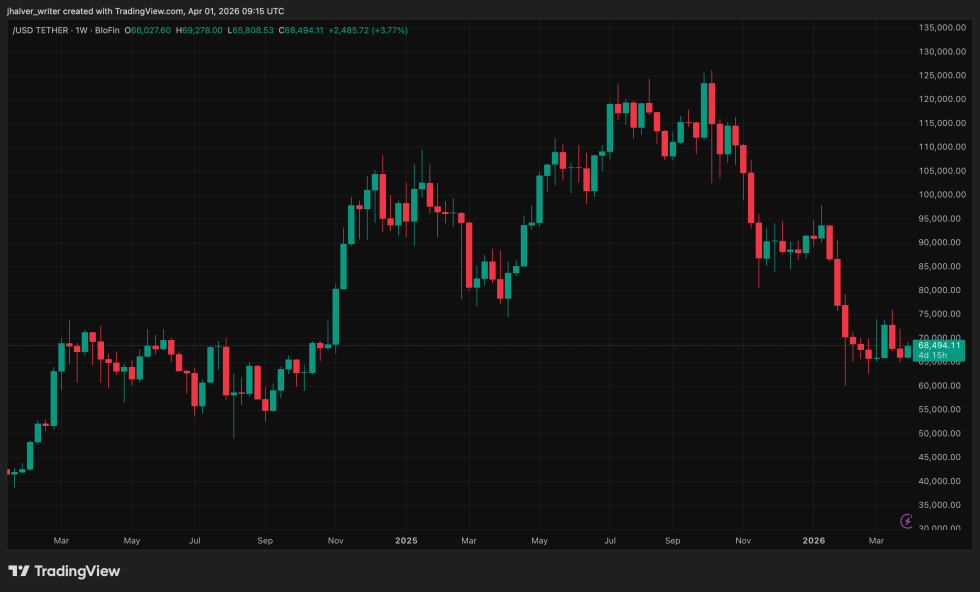
Cover image from Perplexity, BTCUSD chart from Tradingview
Read More
- Silver Rate Forecast
- Gold Rate Forecast
- EUR TRY PREDICTION
- ETH PREDICTION. ETH cryptocurrency
- ETC PREDICTION. ETC cryptocurrency
- Canary’s Trump Coin ETF: A Delusional Gamble? 🐦💸
- Brent Oil Forecast
- Hyperliquid’s HYPE Breaks Records, Markets Go Wild! 🚀💰🔥
- Cardano’s Wild Ride: Is $1 the New Reality? 🧐
- Incentiv’s Testnet Triumph: When Blockchain Meets Community Love 💖💰
2026-04-01 19:41