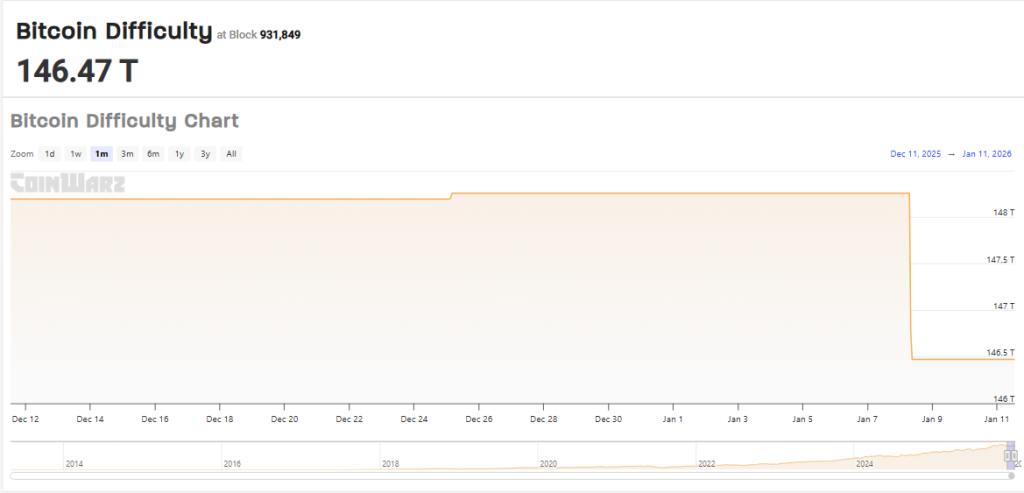
Well, I say, old bean, it appears the Bitcoin mining chaps have been handed a bit of a reprieve, what? The network’s mining difficulty, that pesky little number that keeps them on their toes, has taken a tumble to a smidge over 146 trillion during its first recalibration of 2026. A modest easing, to be sure, but one that’s bound to have the miners breathing a sigh of relief-however fleeting. 🌬️
A Brief Respite in the Trenches
Now, according to the eggheads, the average block times were clocking in at a sprightly 9.88 minutes-a hair faster than Bitcoin’s target of 10 minutes. This, my dear reader, is what prompted the protocol to give the miners a bit of a break. Blocks were being churned out quicker than a Jeeves-prepared breakfast, and so the difficulty took a downward turn. A temporary hurdle reduction, if you will. 🏃♂️💨
But let’s not get carried away, eh? Even with this dip, the difficulty remains stiffer than a British upper lip compared to yesteryears. Miner margins are still feeling the pinch, thanks to the 2024 halving and the rather extravagant hardware investments of 2025. Some poor blighters have reported returns thinner than a baronet’s excuse, as hash prices softened while energy and equipment costs remained as stubborn as Aunt Agatha. The drop to 146.4T? A brief window of relief, not the dawn of a new era. 🤑
The Next Reckoning: January 22
Word on the street-or rather, the blockchain-is that the next difficulty recalculation is slated for January 22, 2026. The crystal ball gazers at CoinWarz and other trackers predict a likely uptick to 148 trillion, as block times slow back to their 10-minute waltz. If that holds true, the miners’ respite will be as short-lived as a Bertie Wooster scheme. Competition, old sport, may well ramp up again. ⏳

Why All the Fuss, You Ask?
Ah, the difficulty-it’s the protocol’s way of keeping things shipshape and Bristol fashion. Every two weeks (or 2016 blocks, if you’re counting), it adjusts to match the computing power securing the chain. More hash power? Difficulty rises. Less power or blocks coming too fast? Difficulty eases. It’s all rather like Jeeves adjusting my cravat-precise and necessary. These tweaks determine how swiftly miners unearth blocks and how much elbow grease they must exert for their rewards. 💪
Miners, of course, will be keeping a beady eye on hash rate trends, power costs, and Bitcoin’s price-the trifecta of profitability. Markets, meanwhile, tend to take these technical tweaks in stride, but sustained shifts in difficulty or hash power can signal broader changes in miner behavior. Supply dynamics, old chap, could be in for a spot of turbulence. 📉📈
To sum it up, January’s first adjustment trimmed difficulty to a tidy 146.4T, with block times averaging 9.88 minutes. Estimates suggest a likely rise to 148.20T around January 22, should conditions play ball. Observers agree: it’s a temporary breather, not a full-blown holiday for miners. The financial pressures of 2025? Still lurking in the wings, I’m afraid. 🕵️♂️
Read More
- USD HUF PREDICTION
- Gold Rate Forecast
- ETH PREDICTION. ETH cryptocurrency
- Silver Rate Forecast
- SEC Suddenly Goes Soft on Crypto? Dragonchain Case Dropped—What Happened?! 🐉💼
- Brent Oil Forecast
- Bitcoin’s Wild Ride: Will You Laugh or Cry? 🤔💸
- The Future of Lido [LDO]: Retail Darlings vs. Profit-Hungry Whales 🐋💰
- Crypto Whirlwind: How DeepBook’s Wild Ride Might Just Make You Smile 😏💸
- Bitcoin Beats Amazon! 🍕 The Day Crypto Took Over the World
2026-01-11 22:13