It was in the autumn of 2025-when the leaves turned not gold, but green, the color of dollar bills-that Kraken, that solemn cathedral of digital wealth, acquired Breakout, a modest firm that assessed men not by their lineage or charm, but by whether they could turn $10,000 into $10,500 without trembling. A sobering move. No fireworks, no speeches from rooftops, only a press release as dry as last year’s communion wafers. And yet, it meant something. Or perhaps nothing. Such announcements always do, like church bells: they toll, and we pretend to know for whom.
“We now allocate capital,” said Arjun Sethi, co-CEO and presumed philosopher-king, “not based on who you are, but on what you know.” A noble sentiment. One wonders what his mother would say. Surely she taught him that knowledge alone cannot pay for a nice dinner in Zurich, nor quiet the nagging voice at 3 a.m. that whispers: Did I leave the stop-loss on?
Still, the world is watching. Institutions, bored of bonds and grown weary of merger arbitrage, now turn their gaze to prop trading-once the domain of sleep-deprived twenty-somethings fueled by ramen and delusion. The numbers, if one trusts numbers (a dangerous habit), show that global interest in “prop trading” rose by 5,000%. A fire, they say, begins with a single spark. Or in this case, 5,000 sparks and a desperate Google search from a guy in Minsk at 2 a.m.
Thunderstruck by Numbers, Maybe Literally
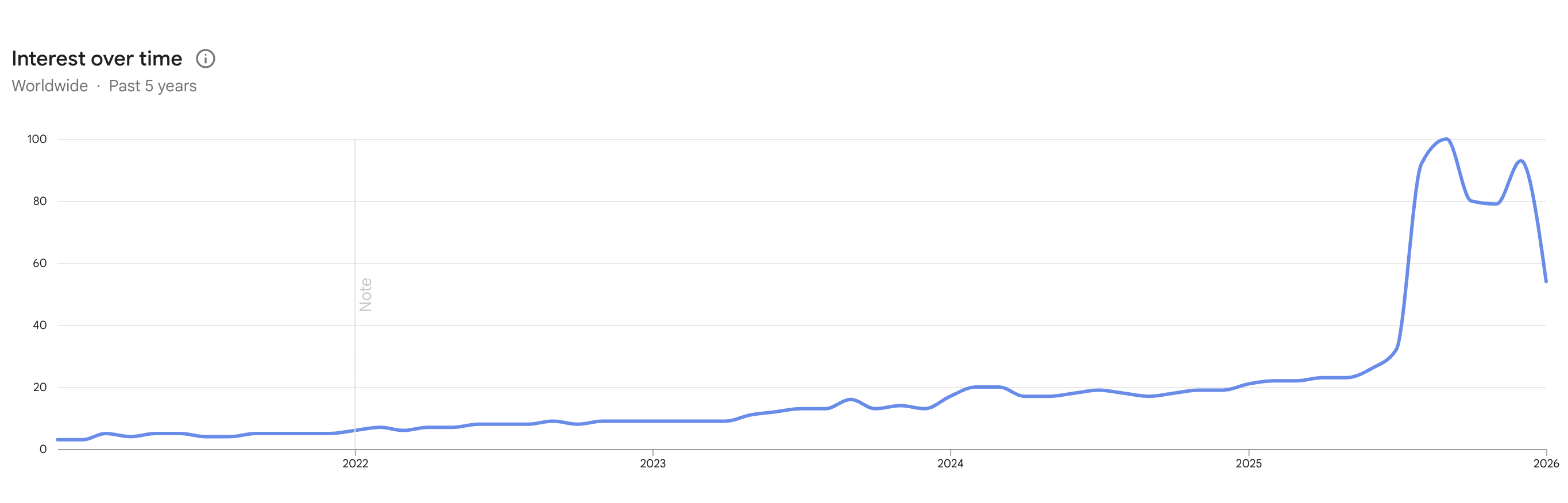
Five-point-eight billion dollars in 2024. Fourteen-point-five by 2033. The math suggests growth. The soul suggests that perhaps we have collectively misplaced our priorities. A market once nurtured by dreamers now grows faster than a rumor in a small village. Traditional investing searches rose a modest 240%-which makes one suspect that people still kind of get stocks. But crypto prop trading? Up 1,264%. Such enthusiasm is inspiring. Or terrifying. Or both, like a bear hug from a robot programmed only to squeeze.
And here is the punchline: 90% of the top prop firms saw search interest spike in August 2025. Not because of new features. Not due to better support. But because FOMO, that eternal plague, had slithered from crypto Twitter into the Google search bar.
Why Big Fish Eat Small Fish (and Occasionally Choke)
Kraken, having already swallowed NinjaTrader and Capitalise.ai-poor creatures-they now open their jaws for Breakout. A pattern emerges, dear reader. The app store of trading tools is being consolidated under one roof, like a mourning family gathering after a will is read. “He left everything to the platform with the best API.”
Breakout, in its short life, had funded 20,000 traders. Twenty thousand souls now granted access to Kraken’s “institutional liquidity,” a phrase that sounds important but could just mean “faster order routing.” Still, they now trade with the force of an exchange behind them-like a choir backed by the Moscow Philharmonic. They may not sing better, but the reverb is impressive.
And so, the little prop firms tremble. If Kraken decides to start a funded trader contest with prizes in XRP, who will even care about your “75%-profit-split-if-you-don’t-blow-the-account”? The age of the independent tinkerer-with spreadsheets and dreams-may be over. Long live the conglomerates.
The Competition, Now with 30% Less Hope
FTMO, old and dignified, like a banker who still wears a hat, expanded its crypto offerings to 30+ CFD pairs. A triumph. One might even say: How brave. They’ve served a million traders and enjoy a 4.8/5 on Trustpilot-higher, one notes, than most marriages. But can ratings stop the tide of exchange-backed fusillades? Or will they too, in time, be absorbed into the great Kraken stomach, digested slowly with interest?
Meanwhile, smaller platforms-those not backed by seven-figure legal teams and data centers in Iceland-now specialize. “We don’t just give you money,” they say, “we give you meaning.” Or at least a Discord server with an AI bot named Gary that says: “Have you tried not trading for a week?”
AI Enters the Madhouse
The great irony? Most traders fail not from lack of capital, but from lack of sense. Or sleep. Or the ability to accept that you were wrong-the market moved on, and so should you. Traditional prop firms, cold and clinical, offer evaluation: pass or perish. Breakout did. FTMO does. Kraken now does, with a stone face and a waiting spreadsheet.
But Fondeo.xyz-yes, dot-xyz, because seriousness is overrated-offers something different: AI coaching. Not to pick trades, but to stop traders from picking fights with their charts. “This trade,” the AI might say, “reflects your unresolved childhood trauma.” Or, more usefully: “Step away. You’ve been staring at Bitcoin for 17 hours. That’s not dedication. That’s a cry for help.”
The AI trading market is expected to reach $40.47 billion by 2029. Most of that money will go toward algorithms that predict market patterns. A fraction-likely the most noble-will go toward algorithms that gently suggest: Maybe go outside?
What It Means for the Young Man in the Dark Room
Opportunity, they say. And danger. Kraken now offers security, liquidity, and the comfort of knowing your funds aren’t held by a guy named Vlad operating from a VPN. But their evaluation? “Intentionally rigorous.” Obviously. Because nothing says “opportunity” like a gauntlet designed to break your spirit in precisely 47 days.
The market divides as it always does: those who believe in their skill, and those who believe in second chances. The former line up at FTMO or Breakout like pilgrims at a shrine. The latter turn to Fondeo.xyz, where the AI doesn’t judge-no, it just notes: “You’ve had three consecutive losses. Your heart rate is elevated. Shall we talk?”
The Road Ahead (Paved with Margin Calls)
More acquisitions will come. Smaller firms will vanish-some due to bankruptcy, others due to shame. The industry will mature, they say, like wine. Or perhaps more like a plague: swift, inevitable, and altering the landscape.
Google Trends shows no sign of decline. More young people will trade, more will fail, a few will claim they “have an edge.” Fewer still will.
And Arjun Sethi, with his vision of transparent, programmable capital platforms, may be right. Or history may remember him as the man who helped monetize anxiety.
Either way, the market moves on. The traders, blinking in the dim glow of their screens, press “Buy.” Again. As they have before. As they will again. Not because they will win, but because, for a moment, they believe they might. And isn’t that the most tragic-and human-of all trades?
Read More
- Brent Oil Forecast
- Gold Rate Forecast
- ETC PREDICTION. ETC cryptocurrency
- IP/USD
- Brad Garlinghouse Reveals Shocking XRP Truths – You Won’t Believe What Happens at Vegas!
- XRP EUR PREDICTION. XRP cryptocurrency
- Bitcoin Eyes $60K 200WMA as ETF Pressure Builds While BTC Tests $76,200 Lows
- JPX Signals Readiness for Crypto ETFs as Tax Rules Take Shape
- Ethereum’s Price Drama: Whales Whisper, Retail Shouts (Who’s the Real Star?)
- Ethereum Defies Fed: $1B Buying Spree Signals Long-Term Bullish Outlook
2026-01-25 08:41