In the world of Bitcoin, where even the slightest tweak can send ripples through the blockchain, Mononaut-a developer at Mempool.space-has raised the alarm on a proposal that could disrupt the very foundation of how we know Bitcoin to function. His critique? The so-called “Reduced Data Temporary Softfork” might just render legitimate transactions practically obsolete.
Review of Transaction Data Shows RDTS Could Block Key Bitcoin Use Cases
A controversial soft fork proposal aimed at curbing excessive data storage on the Bitcoin blockchain is causing quite a stir. On Wednesday, Mononaut, an independent analyst and Mempool.space developer, decided to go public with his concerns. His warning: the new rules could throw a wrench in Bitcoin’s gears and disrupt a variety of transaction types.
The proposal, dubbed the Reduced Data Temporary Softfork (RDTS), comes with a strict set of rules meant to curb data-heavy transactions. Proponents of the proposal claim it’s necessary following the Bitcoin Core v30 update, which removed OP_RETURN data limits. Of course, when you’re dealing with Bitcoin, even removing one line of code can lead to chaos.
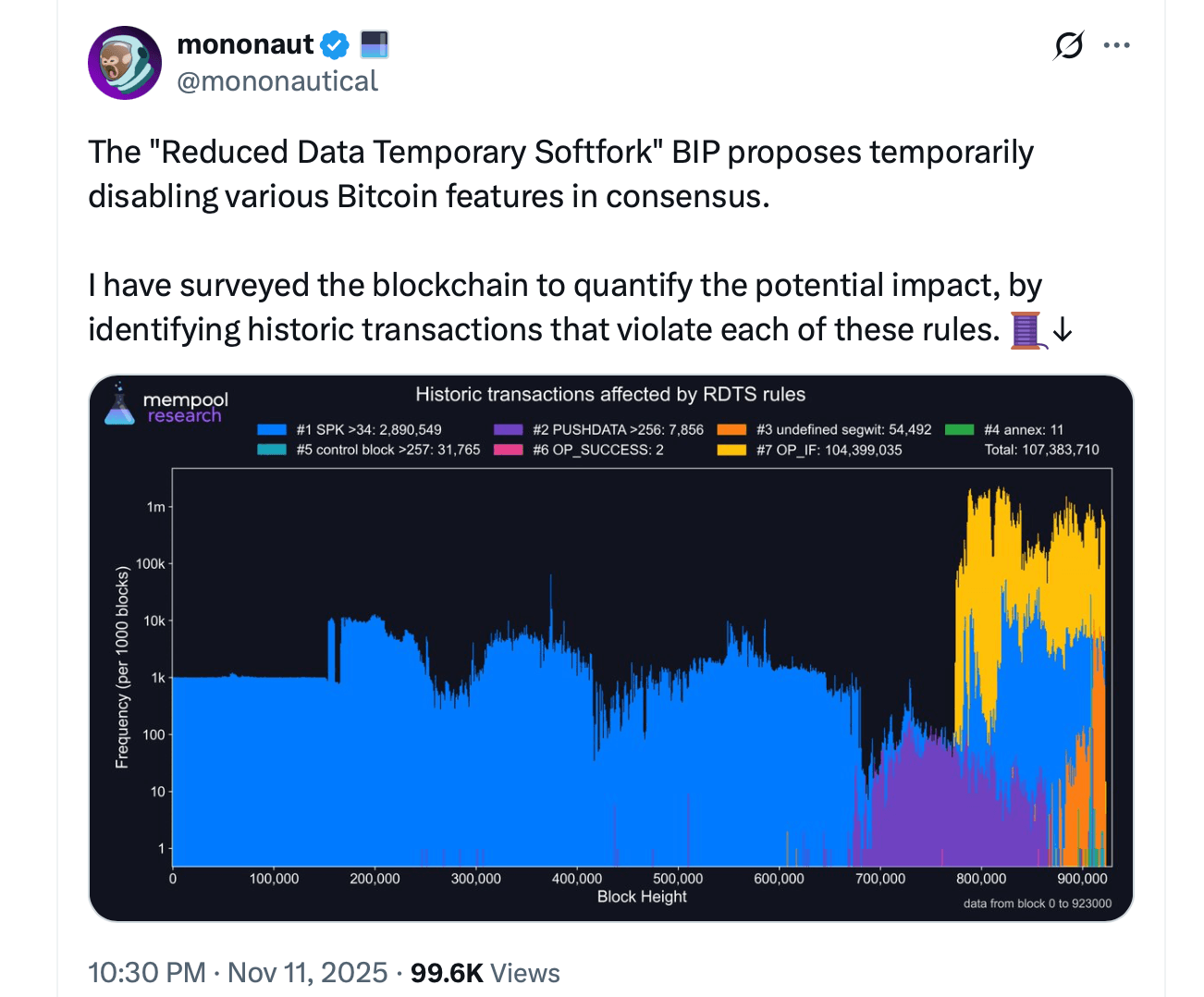
The RDTS proposal aims to tighten restrictions on several fronts: it limits scriptPubKeys to 34 bytes, caps OP_RETURN outputs at 83 bytes, bans undefined witness versions, and restricts Taproot control blocks. Proponents argue that these measures serve as an emergency brake against potentially disastrous legal risks for node operators, should someone decide to embed illegal content in the blockchain.
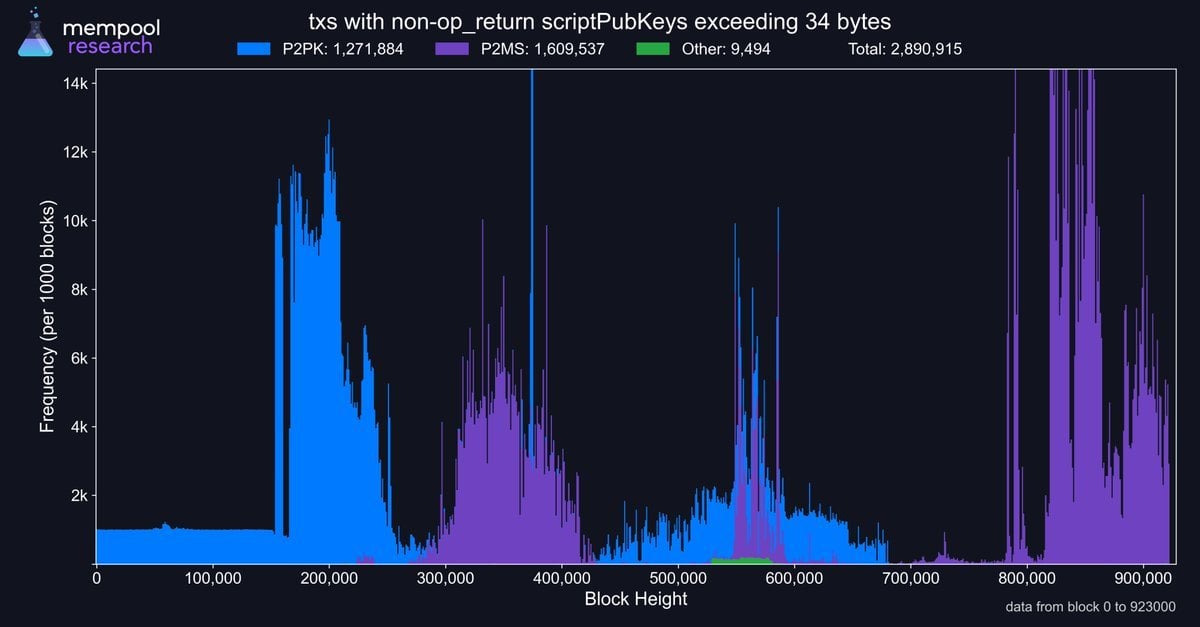
But here’s the twist: Mononaut’s assessment reveals a deeper issue-he dove into historical blockchain activity to see what real-world transactions would fail under the new rules. Spoiler alert: it’s not pretty. The scriptPubKey size limit alone would invalidate all pay-to-public-key (P2PK) and multisig (P2MS) outputs. And that’s just the beginning.
Now, let’s talk about the truly absurd part: one of the proposed rules would invalidate OP_PUSHDATA operations with payloads over 256 bytes. Great, right? But hold up! Mononaut’s analysis suggests this won’t impact inscription envelopes-at least, not unless they’re the executed kind. But-oh, there’s always a but-undefined witness versions are a big problem. These would mess with over 54,000 historic transactions, many of which used unconventional outputs to bypass OP_RETURN limits. If that’s not a Kafkaesque nightmare, I don’t know what is.
Further complicating things, Mononaut points out that this rule would also block Taproot annex witness stacks, affecting at least 11 transactions. But the real kicker? Taproot control blocks, which are frequently used for data embedding, are under threat. Around 32,000 past transactions feature control blocks deep enough to be at risk. And even smaller configurations-like those from an active address spending at depth 11-would be blocked.
Let’s just say if you’re using Taproot for anything that even remotely resembles data embedding, RDTS might put an end to your Bitcoin adventures. It’s not a good time for experimentation, folks!
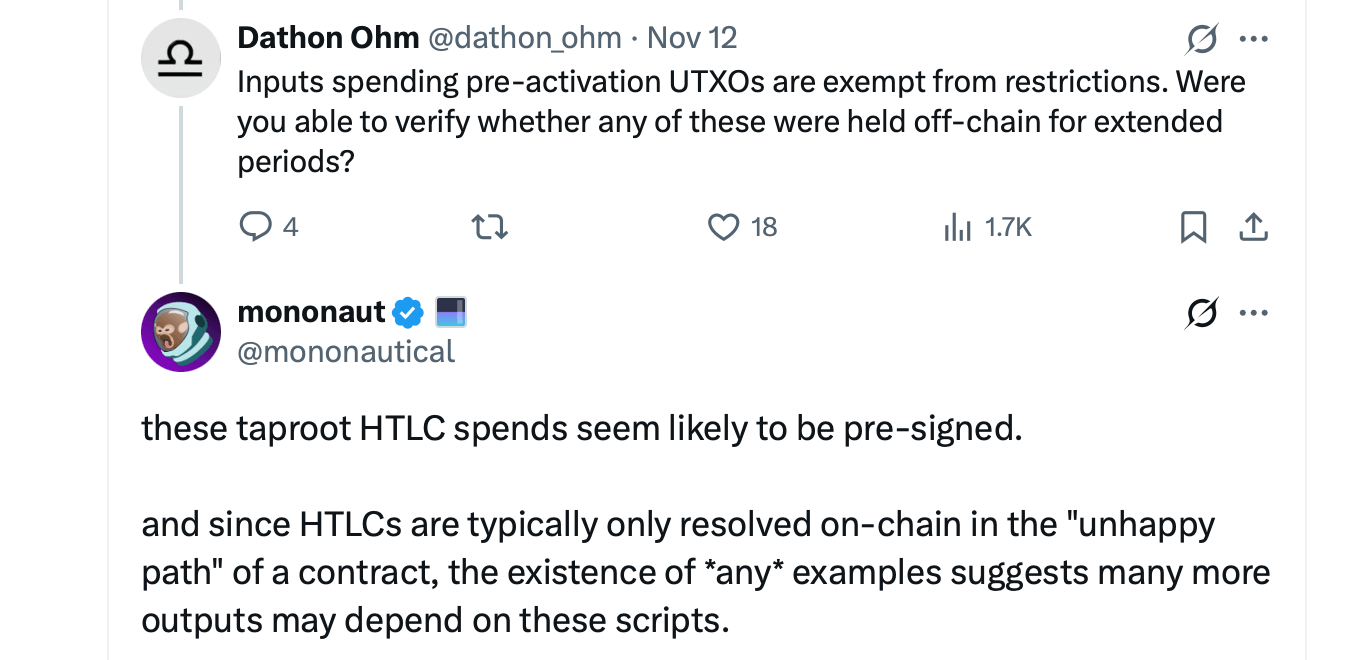
The proposed rules’ strictest items-like banning OP_SUCCESS* and anything executing OP_IF or OP_NOTIF-reach into areas far beyond mere inscription envelopes. Mononaut pointed out that some historic OP_SUCCESS transactions, including a notable one by Burak that broke lightning, could be disabled. And let’s not forget about those non-inscription OP_IF-based Taproot spends. This is where Bitcoin’s experimental spirit clashes with practicality. Think decaying multisig templates, HTLC contracts, and even wallets that intentionally disabled their keypath, relying entirely on script-path spending.
But hey, proponents of the RDTS might argue that those affected could simply fall back on keypath spending. Mononaut isn’t buying it. His data shows that over half a million Taproot spends come from outputs with disabled keypaths. So, to all the “just use keypath” crowd, Mononaut has this to say: good luck with that. 😉
Supporters of RDTS argue that it’s a necessary short-term measure to preserve Bitcoin’s core monetary function and reduce node burdens. Critics, however, fear it might bring about de facto censorship, block valid transactions, and cripple existing Bitcoin applications. It’s a showdown, and it’s just getting started.
What we’re witnessing here is a fundamental debate about Bitcoin’s future: should it stay strictly monetary, or should it continue accommodating experimental, data-heavy uses? The proposal is still in draft form, and the conversation among developers, researchers, and ecosystem participants is far from over. So, buckle up, folks, this one’s gonna be a bumpy ride!
FAQ ❓
- What is RDTS?
A temporary soft fork proposal that restricts several Bitcoin script and data features. - Why is RDTS being debated?
Supporters want to curb data abuse, while critics say it disables valid transactions. - What did Mononaut find?
His analysis shows many historical transactions would fail under RDTS rules. - How long would RDTS last?
The proposal outlines a one-year activation window if adopted.
Read More
- ETH PREDICTION. ETH cryptocurrency
- Gold Rate Forecast
- Warning: Binance-Listed Siren Token Rallies 30X—Here’s Why You Should Stay Away
- USD INR PREDICTION
- Altcoins About to Explode? You Won’t Believe What’s Next for These 4 in May 2025 🚀
- Bitcoin’s Rally: The Unlikely Hero of the Financial World! 🚀💰
- USD TRY PREDICTION
- BCH PREDICTION. BCH cryptocurrency
- Ethereum Bulls on a Rampage: 67 Million ETH Holders Poised for Green Glory!
- Trump’s Pick for Fed Chair: Kevin Warsh’s Billion-Dollar Crypto & AI Empire
2025-11-13 21:35