In 2024 and 2025, Indonesian courts convicted three people of funding terrorism. Each conviction relied heavily on evidence found on the blockchain.
These rulings demonstrate a change in how courts across Southeast Asia view blockchain information. Wallet addresses and transaction records are increasingly being accepted as official evidence in legal cases.
How Blockchain Data Built the Case
As part of our investigation, we collaborated with Indonesia’s counterterrorism police, Densus 88, and the country’s financial intelligence unit, PPATK. Together, we were able to track cryptocurrency transactions connected to all three defendants involved in the case.
These individuals didn’t directly commit acts of violence. Instead, they helped fund terrorism by gathering money, sending it, and changing it into cryptocurrency to support terror networks.
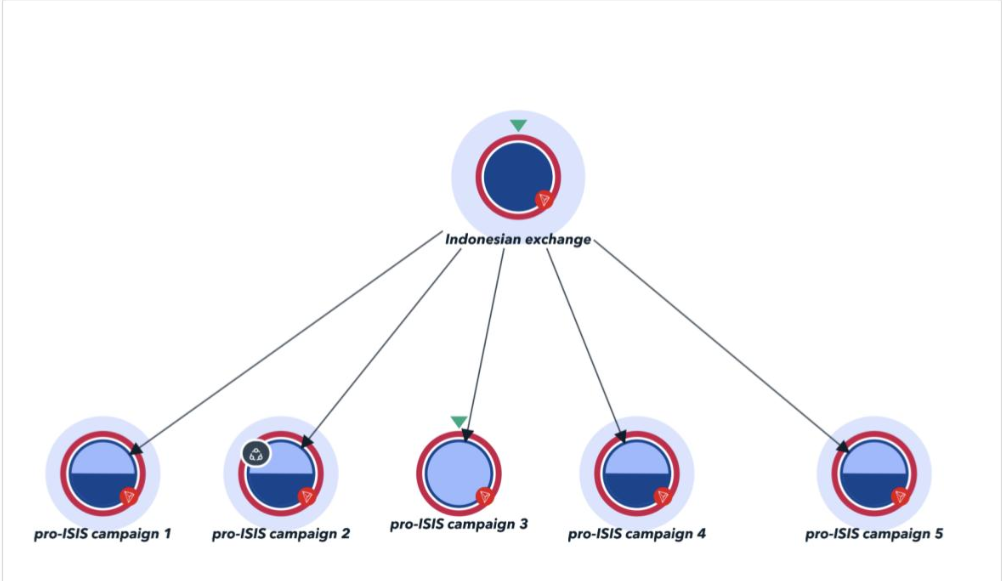
I recently came across a case where someone moved over $49,000 in Tether – that’s USDT, a stablecoin – out of an Indonesian crypto exchange and sent it to an exchange overseas. They did this in 15 separate transactions, which seems a little unusual.
I was shocked to learn that the money ended up supporting ISIS fundraising efforts in Syria, according to TRM Labs. It’s a really disturbing revelation about where those funds ultimately went.
According to a report by TRM Labs, Indonesian courts have not only accepted cryptocurrency as evidence in legal cases, but have successfully used it to build a case against individuals accused of funding terrorism.
A Regional Trend Takes Shape
Indonesia isn’t the only country focusing on this. TRM Labs has observed that Singapore, Malaysia, and several other nations in Southeast Asia are also building up their ability to analyze blockchain data.
The company explained that terrorist groups are increasingly using cryptocurrency because regulators haven’t yet applied the same level of oversight to digital currencies as they do to traditional banking systems.
On April 1st, authorities in Cambodia and China arrested Li Xiong, the previous leader of Huione Group. This group is suspected of operating a network of scam centers involved in schemes like “pig butchering” and other cryptocurrency theft.
Xiong was sent to China to stand trial for alleged fraud and money laundering. His arrest followed the capture of Chen Zhi, the leader of Prince Group, which also controls Huione Group, by three months.
Li Xiong, the head of a major cryptocurrency money laundering operation in Southeast Asia, was sent from Cambodia to China to face legal proceedings, following the earlier case of Chen Zhi. The US government had previously confiscated 127,000 bitcoins from Chen Zhi.
— Wu Blockchain (@WuBlockchain) April 1, 2026
In February, TRM revealed that illegal actors received approximately $141 billion in stablecoins in 2025 – the highest amount in five years. The majority of these illicit crypto transactions – 86% – were linked to sanctioned individuals or entities.
Recent convictions in Indonesia show it’s becoming harder to fund terrorism using cryptocurrency. Courts throughout the region are increasingly willing to use blockchain data as proof in legal cases, making it more difficult to secretly finance terrorist activities with crypto.
Read More
- Gold Rate Forecast
- Brent Oil Forecast
- USD ZAR PREDICTION
- Incentiv’s Testnet Triumph: When Blockchain Meets Community Love 💖💰
- Investors Panic as Bitcoin ETFs Suffer Shocking $171M Outflow Amid Rising Geopolitical Tensions!
- US DOJ Shuts Down Crypto Unit: Who Let the Banter Out? 😎
- Traders Rush Back to XRP: The Silent Storm Brewing in the Crypto World! 😱🚀
- You’ll Never Guess What This Crypto ETF Claims To Do For Your Portfolio! 🤑
- Kraken’s Wild Ride: From Crypto to Stocks, Because Why Not? 🐙📈
- Bitcoin’s Buy Zone: Closer Than Ever? Or Just a Trick?
2026-04-07 09:16