Coinbase, the biggest cryptocurrency marketplace in the United States, doesn’t support the current version of the Clarity Act, which aims to stop stablecoins from offering returns.
During a meeting with senators on Monday, the company voiced worries that the bill’s wording and goals would undo the progress made towards creating a fair competitive environment for cryptocurrency firms and traditional banks.
Coinbase opposes Clarity Act draft
Senators Thom Tillis and Angela Alsobrooks recently worked on a proposal to help move a bill forward in the Senate. This proposal tackled the ongoing discussion about how stablecoins earn returns, addressing concerns from banks that these returns unfairly compete with traditional savings accounts.
The bill aimed to limit interest earned on simply holding stablecoins, and instead encourage rewards from actively using them.
The senators who created the bill were hopeful it would finally pass, but Coinbase’s recent position appears to be blocking its progress.
Clarity Act faces new headwinds
Coinbase is a significant financial supporter of Fairshale Super PAC, a large bipartisan group working to get politicians who support cryptocurrency and blockchain technology elected to Congress. Fairshale has become increasingly influential in US politics, especially after donating millions of dollars to President Donald Trump’s campaigns.
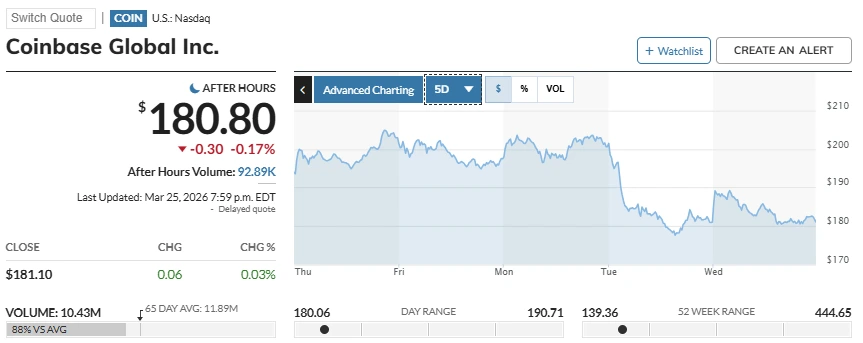
If lawmakers don’t address Coinbase’s concerns about the Clarity Act, they could face cuts to funding. When the initial draft of the Act was released, Coinbase’s stock price fell below $200 and hasn’t rebounded, closing recently at $181.10.
Senator Cynthia Lummis of Wyoming is urging both sides to find common ground, warning that continued delays could negatively impact the country’s financial stability.
People are understandably upset about the latest delay, but some believe banks require safeguarding due to the massive amount of existing debt.
I understand things take time in this business, but we’ve been expecting this deal to close for a long time. Will we finally have a clear answer in 2026, or will it take until 2027?
— Nicholas Urso (@Nicksobtc) March 25, 2026
Read More
- Pi Hotel Vietnam: First to Accept Pi Coin Payments in Real-World Transactions
- Silver Rate Forecast
- Gold Rate Forecast
- USD IDR PREDICTION
- USD TRY PREDICTION
- Warsh’s Fed Debut: A June Rate Cut? Don’t Hold Your Breath, Darling
- Ripple’s CEO Reveals Shocking Truth About CLARITY Act!
- USD MXN PREDICTION
- SOL GBP PREDICTION. SOL cryptocurrency
- The Quiet Rise of Ethereum: Is it Really Gone or Just Getting Started?
2026-03-26 05:06