Ah, October 2025-a month that sent shivers down the spines of crypto investors, as billions vanished faster than a chocolate cake at a children’s party. But amidst the chaos, a curious tale unfolded, one involving Chinese tea money, shadowy laundering networks, and a man named Chen Zhi, who seemed to have more secrets than a Roald Dahl novel.
Far fewer remember (or perhaps, far fewer care to admit) that October was also the month the U.S. government announced its grandest Bitcoin seizure-a whopping stash tied to an international crypto money-laundering scheme. This wasn’t just any scheme; it was a global operation spanning the U.S., U.K., Singapore, Thailand, Cambodia, and China. Coincidence? Or was the crypto crash merely the tip of a very large, very shady iceberg?
The timing, my dear reader, is as suspicious as a fox in a henhouse. Could these events be connected? Oh, but of course they could!
Whispers on Chinese Crypto Twitter (or should we say, the digital equivalent of a whispering willow tree) suggest that the October 10th crash was amplified by a sudden withdrawal of cháqián, or “tea money”-the slang term for the shadowy liquidity that fuels underground banking. This tea money, it seems, had been quietly propping up crypto markets, until a major crackdown disrupted the laundering rails.
Now, before you start thinking this is all just a wild goose chase, let’s consider the facts. Markets were already as fragile as a glass slipper, leverage was higher than a giant’s beanstalk, and liquidity was thinner than a witch’s cackle. Add a macro shock to the mix, and you’ve got a recipe for disaster. But the tea money theory? It’s the cherry on top of this calamitous cake.
Imagine, if you will, a timeline of events so coincidental, it could only be concocted by a master storyteller:
- December 28, 2020: The LuBian mining pool in China is hacked for 127k BTC-the biggest heist since the Great Train Robbery.
- July 2024: Those coins are moved to a wallet later labeled as belonging to the U.S. Government. Who knew Uncle Sam had such a knack for crypto?
- October 8, 2025: The Eastern District of New York announces an indictment against Chen Zhi, the alleged mastermind behind LuBian, for laundering billions in BTC and stablecoins. A wave of takedowns, raids, and seizures follows across Southeast Asia, leaving no scam compound untouched.
- October 10, 2025: Bitcoin plummets, and altcoins wick to zero faster than a witch’s curse. Meanwhile, silver and gold embark on a rally that would make even the most seasoned treasure hunter envious.
- October 14, 2025: The U.S. seizes 127k BTC from Chen Zhi, but remains tight-lipped about the original hacker. China, naturally, accuses the U.S. of theft. A diplomatic row ensues, as entertaining as a Dahlian twist.
So, what does LuBian have to do with all this? Well, if prosecutors are to be believed, Chen Zhi’s network wasn’t just mining Bitcoin; it was part of the plumbing that fed and recycled cross-border liquidity-the very same liquidity traders mistook for “organic” market demand. LuBian, it seems, was more than a mining pool; it was a gateway to a hidden financial empire.
The LuBian Mining Pool: A Tale of Ambition and Amateurism
LuBian, founded in 2020 with operations in China and Iran, quickly rose to become a top-tier mining pool. But its downfall was as dramatic as any Dahlian plot. The 127k BTC heist was made possible by the pool’s amateurish use of the Mersenne Twister, a random number generator better suited for a child’s game than a crypto fortress. The hackers brute-forced their way in, and LuBian vanished into the ether, leaving behind only unanswered pleas for the return of the stolen coins.
Chen Zhi, the man behind the curtain, was no ordinary entrepreneur. Born in 1987 in a small Chinese town, he dropped out of school and made his first fortune running a server for an online game. He then relocated to Cambodia, where he built the Prince Group, a conglomerate that dabbled in real estate, finance, and philanthropy. But beneath the veneer of charity lay a darker truth: a massive scam and money-laundering empire.
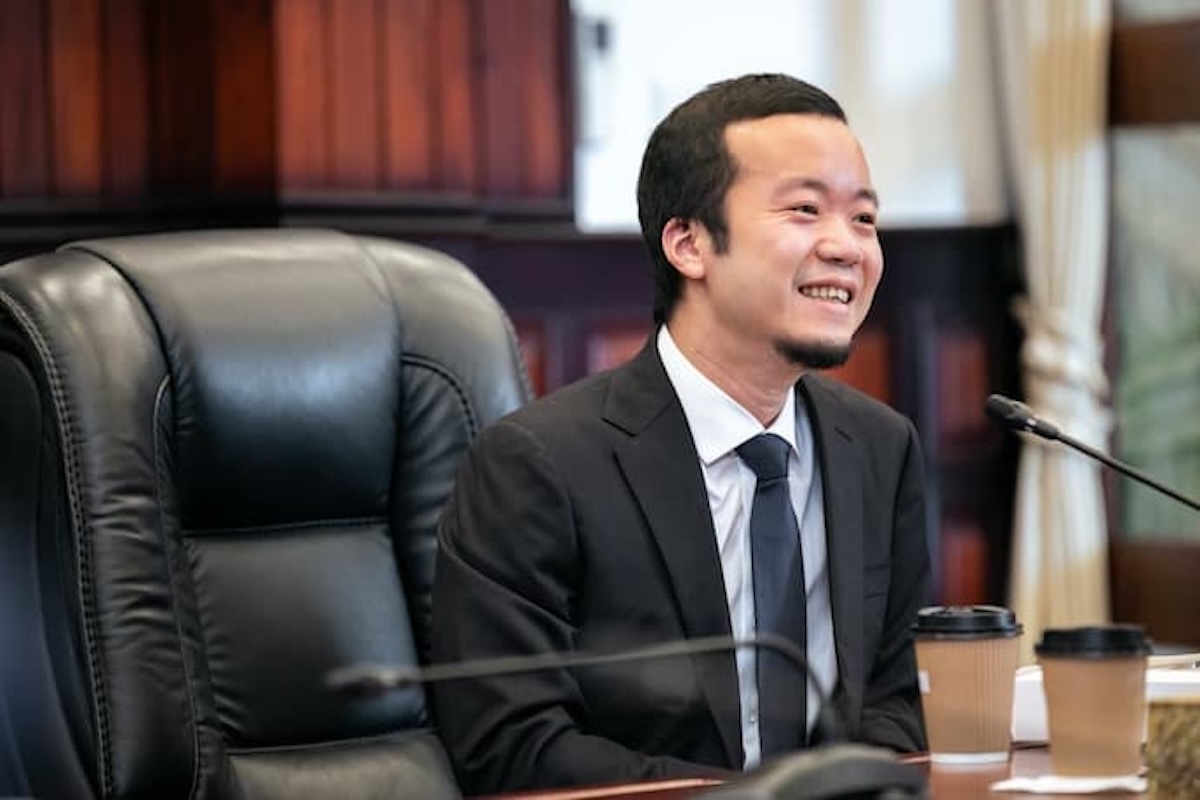
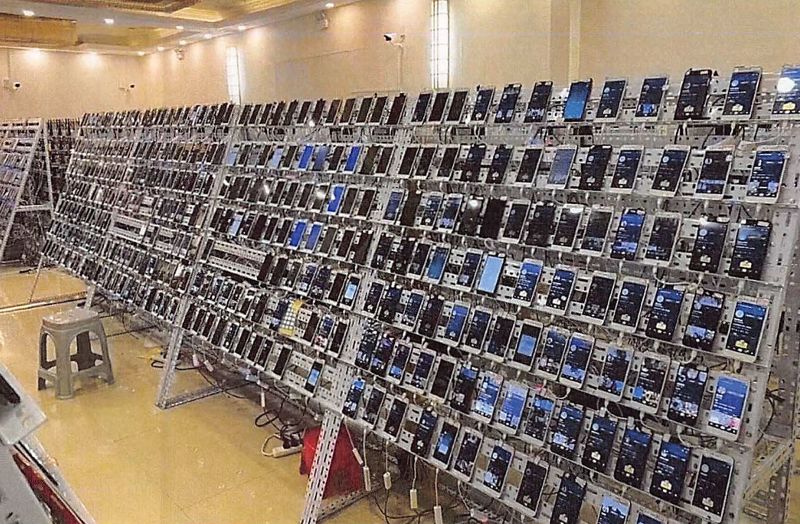
In the October 8, 2025, indictment, prosecutors painted a grim picture of Chen’s operations. His scam compounds, filled with thousands of mobile phones and enslaved workers, were the stuff of nightmares. Locals spoke of workers beaten until they were “barely alive”-a far cry from the philanthropic image Chen cultivated.
Given the scale of his operations, it’s hard to believe Chen was merely a crypto enthusiast. Was his foray into Bitcoin mining a cover for a multi-billion-dollar laundering scheme? The evidence suggests as much.
The Rise and Fall of a Crypto Kingpin
Chen Zhi’s story is a classic rags-to-riches tale, with a sinister twist. From a small-town dropout to a Cambodian tycoon, his success was as mysterious as it was meteoric. But his empire began to crumble in October 2025, when the U.S. indicted him and launched an international crackdown on his operations.
The raids and seizures that followed were nothing short of spectacular. Cambodian authorities closed nearly 200 scam centers, arrested 173 crime figures, and deported 11,000 workers. Chen’s assets, including 19 London properties, were seized. Singapore, Taiwan, Hong Kong, and Thailand followed suit, confiscating hundreds of millions in cash, yachts, luxury cars, and even shelves of liquor. It was a treasure trove befitting a Dahlian villain.
The Crypto Connection: Tea Money and Market Crashes
So, how does all this tie back to the October 10th crypto crash? The answer lies in the laundering machinery. Chen Zhi’s network didn’t just launder money; it provided the liquidity that kept crypto markets afloat. When authorities disrupted this network, they effectively pulled the rug out from under the market.
The process was as intricate as a Dahlian plot: scam proceeds were collected in Bitcoin or stablecoins, off-ramped into fiat, and then used to purchase clean crypto. This recycled liquidity, or “tea money,” was the lifeblood of the market. When it dried up, the order books thinned, and the market became as fragile as a glass house.
Enter the spark: President Trump’s 100% tariff on Chinese imports. With the tea money liquidity gone, the initial sell-off sliced through the thin order books like a hot knife through butter, triggering a cascade of mechanical failures-Binance API overloads, oracle depegs, and perp DEX ADLs. It was a perfect storm, fueled by the disappearance of cháqián.

As the dust settles, one thing is clear: the crypto market is far more interconnected with the underworld than most traders realize. The next time you hear someone shout, “The bull market is here!” perhaps you should check the price of tea money in Shenzhen. After all, in the world of crypto, the real alpha might just be found in the teahouses of Luohu.
Read More
- Silver Rate Forecast
- Polymarket’s 3.14% Pie: A Slice of Genius or Just Crumbs?
- Coinbase’s OCC Nod: Not a Bank, Just A Trust-Big Moves Ahead!
- Gold Rate Forecast
- Claude’s ID Fiasco: Anthropic’s Latest Farce in AI Theatre
- Brent Oil Forecast
- ONDO PREDICTION. ONDO cryptocurrency
- XRP’s Institutional Comeuppance: Finally, a Seat at the Table
- Bitcoin at 75k: The Trigger That Could Unleash a Rally
- Bitcoin’s Wild Ride: War, Oil, and Triangles, Oh My!
2026-03-06 09:00